270° Awning vs. Straight Wall Awning – Pros & Cons & Use Cases
270° awning or straight wall awning? Both types have clear strengths. This comparison shows which one is the better choice and when – based on shade area, mounting, weight, and price.
The Quick Comparison
| Criterion | 270° Awning | Straight Wall Awning |
|---|---|---|
| Shade Area | Very large, covers rear + side | Along one side of the vehicle |
| Setup | Swings out once, covers everything | Quickly extended, very simple |
| Weight & Pack Size | Larger and heavier | Light and compact |
| Wind Stability | Very good with support legs | Good, less surface area for wind |
| Price | Higher | More affordable entry |
| Ideal For | Vans, Overlanders, Long-term Camping | Wagons, SUVs, Weekend Trips |
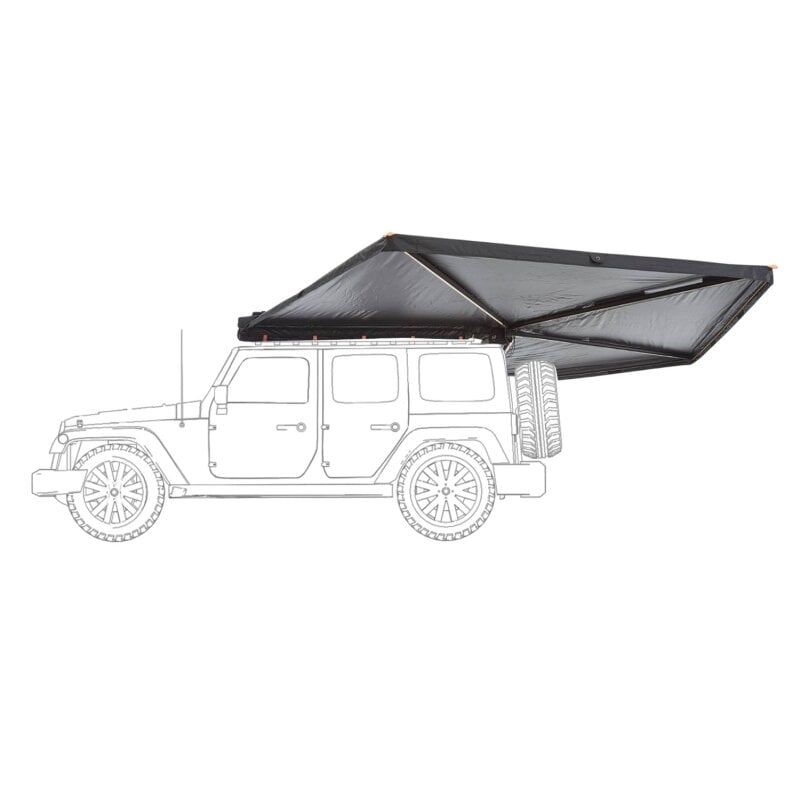
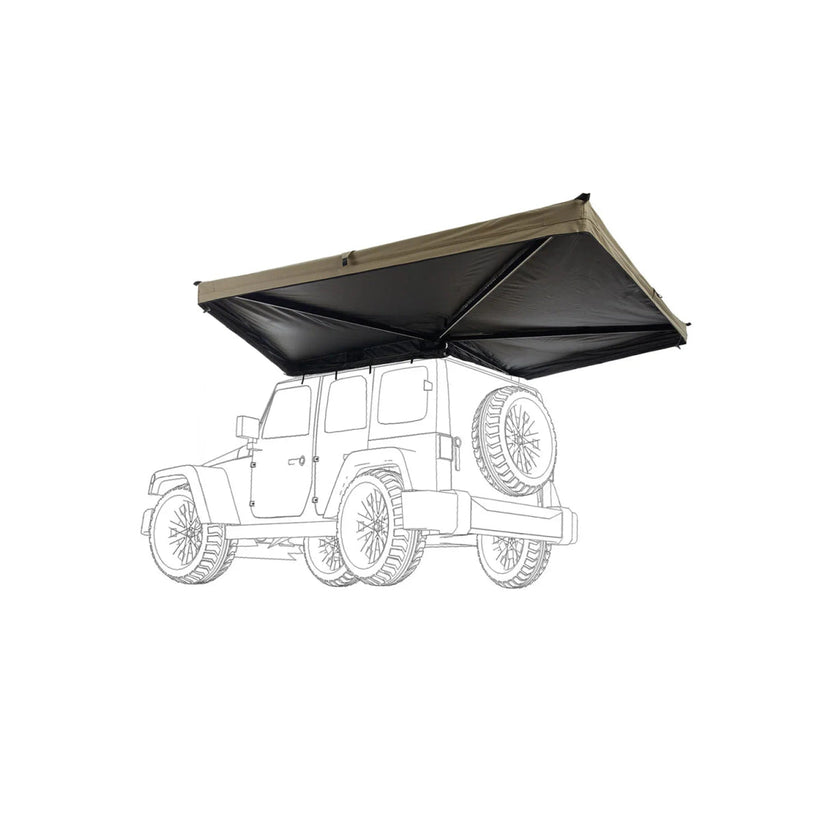
270° Awning
Advantages: maximum all-round shading, ideal as an "outdoor room", expandable with tent walls.
Disadvantages: higher weight, larger pack size, requires sturdy roof rack.
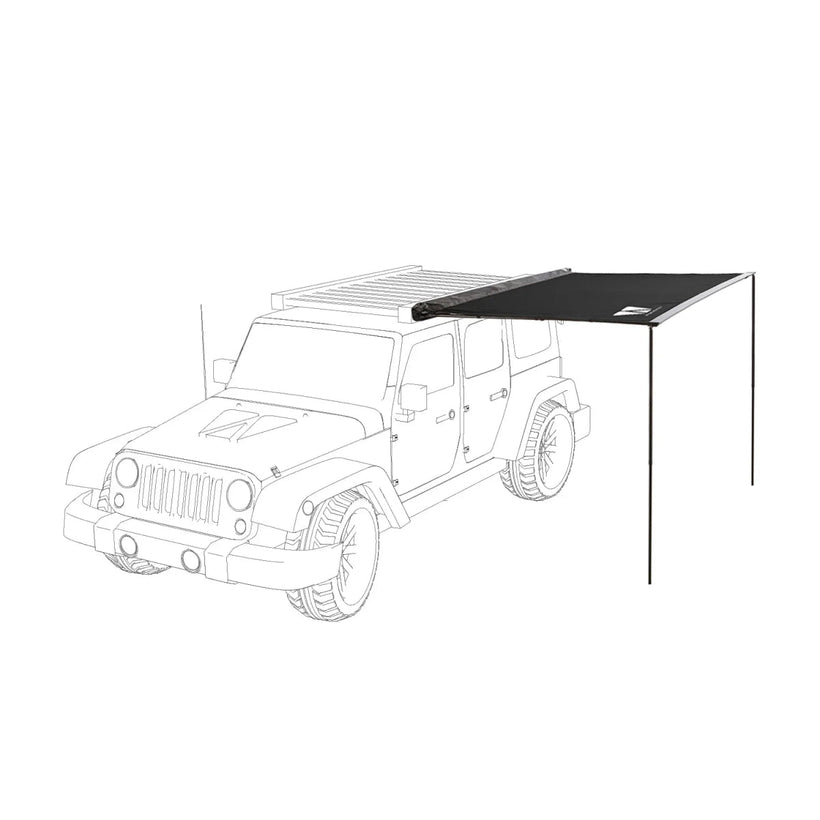
Straight Wall Awning
Advantages: lightweight, fast, cheaper, inconspicuous on the vehicle.
Disadvantages: shade only on one side, smaller total area.
Use Cases
Do you spend extended time outdoors? Those who travel with a van, cook a lot, and want a protected outdoor area are best served by a 270° awning.
Do you want to stay light and flexible? For wagons and SUVs, occasional trips, and a smaller budget, a straight side awning or 180° awning is the pragmatic choice.